

Bathtubs for Luxury Hotels: Freestanding Baths for Suites, Spas and Villas
Bathtubs for luxury hotels do far more than hold water. In a suite, a spa or a private villa, the freestanding bath is often the piece guests remember and the image a property uses to present its rooms. Casa Padrino supplies freestanding bathtubs in marble, copper, cast iron, cast mineral, silk stone and acrylic, together with matching floor-standing taps, and delivers them to hotels, architects and developers worldwide by freight carrier.
This page sets out what matters when you specify a luxury bathtub for a project: which material suits which property, what a filled bath weighs and why the floor must be checked in advance, which tap goes with which tub, how the bath gets into the building and how it is cared for in daily hotel operation. For a project, you receive the same model in the quantity you need, in other colours or made to measure on request.
The freestanding bath in a hotel: suite, spa and villa
A freestanding bathtub changes how a room is read. Instead of disappearing into an alcove, it stands free in the bathroom, sometimes even in the bedroom area of a suite, and becomes the focal point of the design.
The location drives the choice. In a suite, the bath often sits in front of the window or on a low plinth. In a spa, it serves as a ritual bath for treatments. In villas let to guests, robustness counts. A marble bathtub feels calm and monolithic, a copper bathtub warm and handcrafted, a clawfoot bathtub classic and nostalgic.
Materials compared: marble, copper, cast iron, cast mineral, acrylic
The material defines the look, the weight, how long the water stays warm and how the surface is cleaned. The figures below come from baths in the Casa Padrino range:
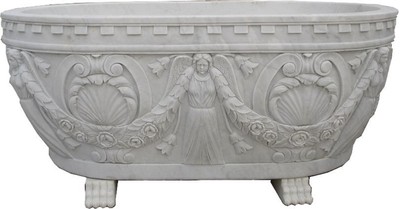
- Natural stone and marble: carved from solid stone, each bath with its own veining. The white freestanding marble bathtub measures 190 x 100 x 55 cm, with grey and anthracite versions at 178 cm in length. Stone holds heat for a long time, but it is the heaviest material and sensitive to acids.
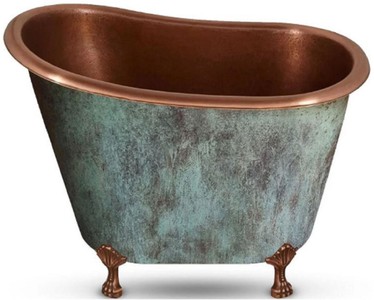
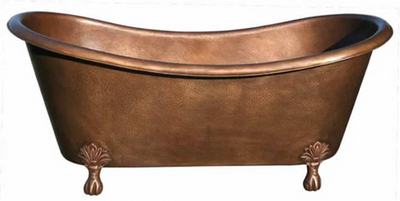
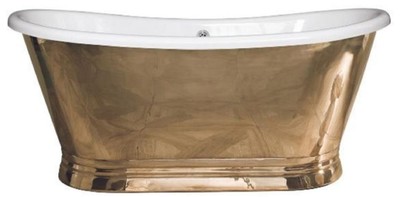
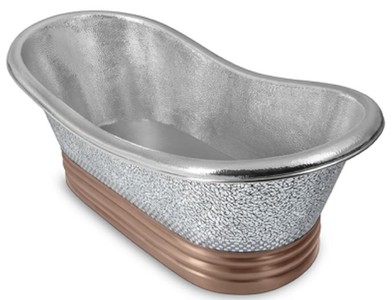
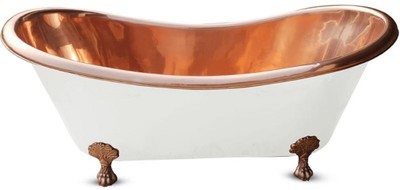
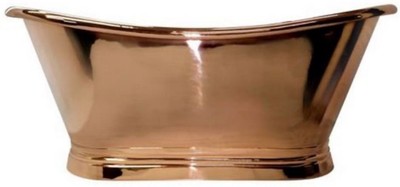
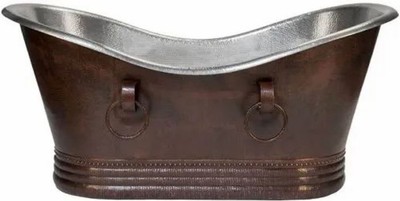
- Copper: hand-hammered, warm in tone, with a patina that develops over time. Typical dimensions are 170 x 72 x 72 cm. Copper baths weigh considerably less than stone.
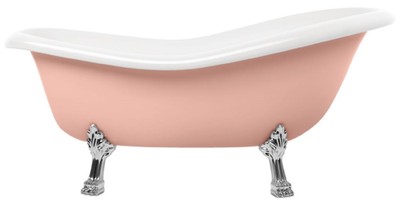
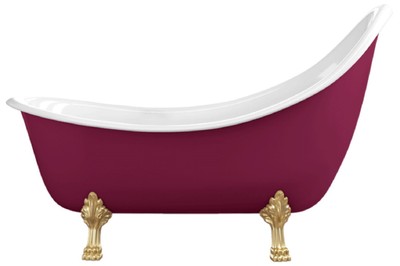
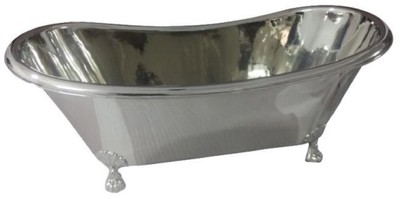
- Cast iron: the classic Victorian bathtub, enamelled inside, painted outside, often on claw or lion feet. Example: 170 x 77 x 61 cm, 141 kg empty, 205 litres capacity.
- Cast mineral and cultured marble: cast in one seamless piece, in satin or high-gloss finish. An Art Deco bath in cast cultured marble at 175 x 80 x 61 cm weighs 128 kg and holds 320 litres. A silk stone bath of 170 x 80 x 55 cm weighs only 92 kg.
- Acrylic: the lightest option, around 49 kg at 170 x 80 x 65 cm, warm to the touch and well suited to upper floors and older buildings with limited load reserves.
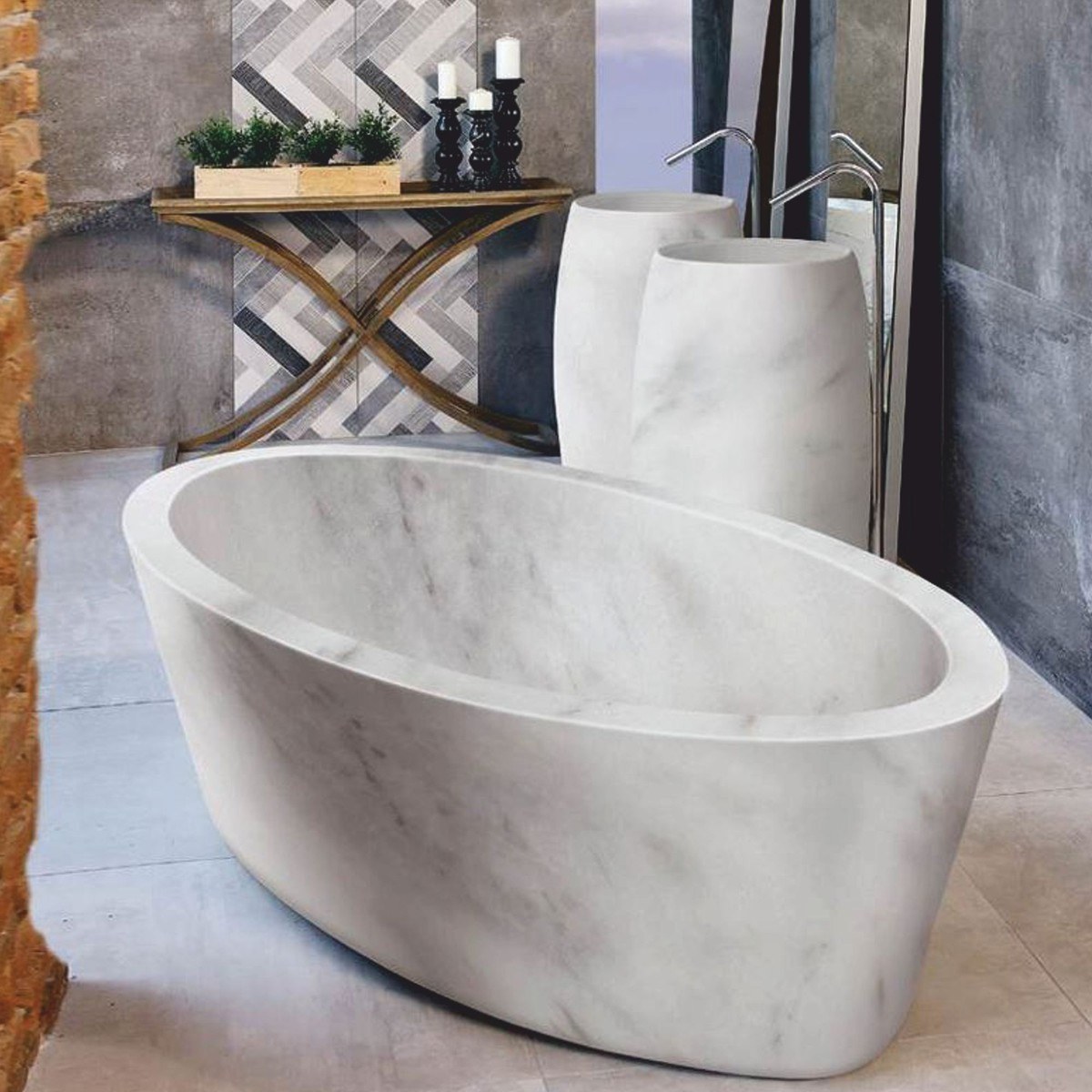
An oval bath in white marble, 190 x 100 cm, turns a suite bathroom into a private spa. In the picture: Casa Padrino Freestanding Luxury Marble Bathtub White 190 cm
Filled weight and floor load: check the structure first
One litre of water weighs one kilogram. A cast iron bath with 141 kg empty weight and 205 litres of water puts around 350 kg on the floor when full, and well over 400 kg with a bather. A cast mineral bath of 128 kg holding 320 litres reaches almost 450 kg when filled to the brim. With marble, the high weight of the stone itself comes on top; we state the exact figure in the quotation.
This load sits on a small footprint, and on clawfoot models on just four points. Have a structural engineer confirm in advance that the floor at the planned position can carry it, particularly in older buildings with timber joists, on upper floors and on raised plinths. Options include placing the bath above a load-bearing wall, adding a load-spreading plate beneath it or choosing a lighter material.
Taps, waste and overflow
Freestanding baths rarely have a tap deck. Water therefore comes from a floor-standing tap rising beside the bath, or from a wall-mounted tap when the bath stands close to the wall. Casa Padrino floor-standing bath taps are around 110 cm high and available in chrome, gold and other finishes. Some baths, such as the 170 cm copper bathtub, are designed exclusively for wall or floor taps.
For a floor-standing tap, hot and cold supplies run through the screed to the tap position, and the concealed body is set before tiling. The waste of a freestanding bath sits in the floor directly below the bath outlet, so its centre point must be fixed before the screed is laid. Some baths come with a push-to-open waste and integrated overflow, others are supplied without tap and waste set. An overflow is strongly advised in hotels, because guests often leave the bath to run unattended. Suitable models are shown on freestanding bath taps.
Getting the bath in: door widths, stairs and lifts
The finest bath is of no use if it cannot reach the bathroom. Before ordering, compare the outer dimensions of the bath and its packaging with every clear opening on the route: entrance, corridors, staircase, lift car and room door. A marble bath 100 cm wide will not pass upright through a standard room door. It is carried on its side, where its 55 cm height counts, and the turning space in corridors becomes the deciding factor.
For heavy baths, check the rated load of the lift and whether the car is long enough. Cast iron, cast mineral and stone need several carriers, lifting straps and possibly a stair climber. In new builds, bring the baths in before door frames are fitted. Casa Padrino delivers by freight carrier; handling inside the building is organised by your site team, so give it a fixed slot in the construction schedule.
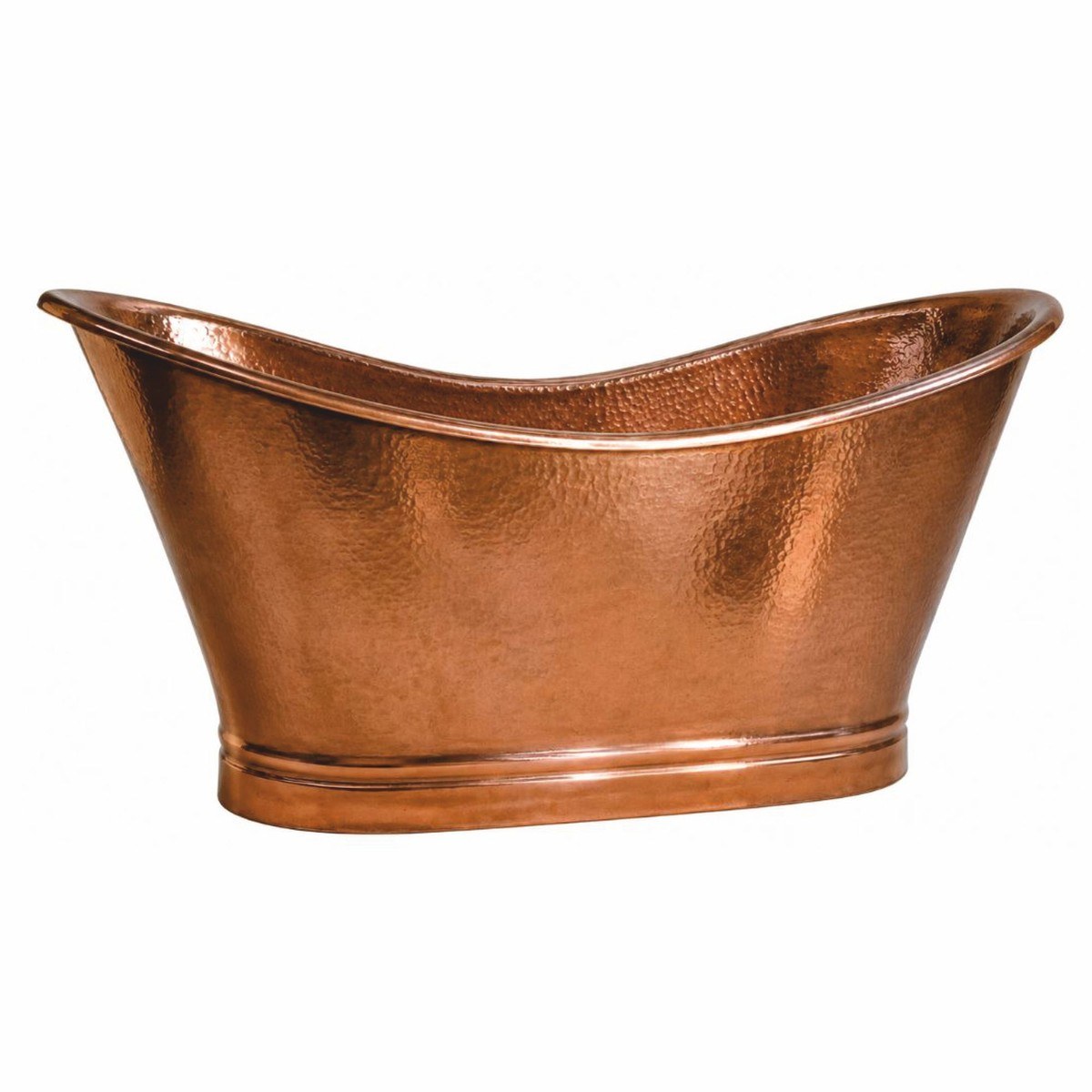
The hammered copper bath, 170 x 72 cm, is paired with a wall or floor-standing tap. In the picture: Casa Padrino luxury Art Nouveau copper bathtub 170 cm
Care and cleaning in daily hotel operation
In a hotel, the bath is cleaned every day, often under time pressure and with standard products. Material-specific care instructions therefore belong in the housekeeping briefing:
- Marble: pH-neutral cleaners only, no vinegar or descalers, no abrasives. A sealant protects against stains and is renewed at regular intervals. Wipe the surface dry after use to prevent limescale.
- Copper: mild soap solution and a soft cloth. The patina is intended. To keep a bright finish, apply wax regularly; acidic and abrasive products attack the surface.
- Enamelled cast iron: very durable, but clean without scouring powder or steel wool so the enamel keeps its gloss.
- Cast mineral, silk stone and acrylic: mild cleaner and soft cloth. Fine scratches in matt surfaces can be removed with an abrasive pad and polish, an advantage over stone.
For every material: remove hard water after each bath with a squeegee or cloth.
Designing the bathroom around the bath
To look free and to be cleanable, a bath needs space: at least 15 to 20 cm from the wall, and around 60 cm if guests are to walk around it. Placing it centrally in front of a window or on the axis of the door stages it the moment someone enters. Flooring should be slip-resistant; large-format natural stone or stone-look porcelain suits almost every bath.
Lighting makes the difference between a bathroom and a spa: a dimmable chandelier or pendant above the bath (within the safety zones set by the electrical engineer) and indirect light in wall niches. For period interiors, see the Victorian bathtub page and the selection of clawfoot bathtubs. Sizes and shapes are covered under freestanding bathtub, and ideas for complete hotel bathrooms under bathroom furnishings for luxury and grand hotels.
For architects and interior designers
Hotel projects rarely involve a single bath. Casa Padrino supports architects, interior designers and planners with:
- Dimensions and drawings: outer and inner dimensions, empty weight, capacity and outlet position for your plans and for coordination with structural and building services engineers.
- Samples: finish and colour samples on request, so you can judge marble, copper or lacquer in the light of the project.
- Quantities: the same model for every suite in a property, in other colours or made to measure on request.
- Scheduling: delivery timed to the site programme, in phases by building section or floor if required.
- One point of contact: from first enquiry to delivery, including taps, washbasins and furniture for the whole bathroom.
Read more on Casa Padrino for architects and designers, and see examples from contract projects under hotel references.
How your project runs: five steps
- Enquiry with dimensions and plans: send floor plans, room sizes, required quantity and target date.
- Selection and samples: we propose suitable baths and taps, with finish samples on request.
- Quotation: you receive a quotation based on your project, with dimensions, weights and lead time.
- Production: the baths are produced in the chosen finish or allocated from stock.
- Delivery: worldwide by freight carrier, on the agreed date to your site or property.
Frequently asked questions about hotel bathtubs
Which material is best suited to a hotel bathtub?
For rooms in heavy use, enamelled cast iron and cast mineral have proven themselves, as they are robust and easy to clean. Marble and copper set accents in suites and spas and need trained cleaning staff.
How heavy is a filled freestanding bathtub?
Add the empty weight, the capacity in litres as kilograms and the bather. A cast iron bath of 141 kg holding 205 litres comes to around 350 kg when full, over 400 kg with a bather. Stone baths are considerably heavier.
Does the floor need checking for a marble bathtub?
Yes. Have a structural engineer confirm the load capacity at the planned position in advance, especially with timber joist floors, on upper storeys and on plinths.
What kind of tap does a freestanding bath need?
Usually a floor-standing tap rising from the floor, or a wall-mounted tap when the bath stands near a wall.
Will a freestanding bath fit through a standard door?
That depends on the width and height of the bath. Baths 100 cm wide are carried on their side. Measure every clear opening, corridor corner and the lift car before ordering.
Do you supply clawfoot bathtubs for hotels?
Yes. Casa Padrino offers Victorian style baths on claw and lion feet in many colours, with feet in silver, gold or brass, suited to classic properties and boutique hotels.
Can we order the same model in larger quantities?
Yes. For hotel projects we supply the same model in the quantity required, in other colours or made to measure on request. Quantities and dates are agreed in the quotation.
Does Casa Padrino deliver bathtubs internationally?
Yes, Casa Padrino delivers worldwide by freight carrier. Since 2007, the company based in Essen, Germany, has furnished hotels, villas and private clients with furniture and bathroom fittings.
Request your hotel project
Send us floor plans, quantities and dates. You will receive proposals for baths and taps and a quotation based on your project.
Email: info@casa-padrino.de · Phone: +49 212 14912917
More trades for your project
- Bronze sculptures
- Sculptures for hotels and gardens
- Marble works
- Marble fireplace surrounds
- Fireplaces for hotels
- Marble columns
- Consoles and side tables
- Garden furniture for hotels and resorts
Venues and sectors
- Hotel Room Furniture
- Hotel Sofas and Hotel Armchairs for Lobbies
- Bar Counter for Hospitality
- Lounge and Club Furniture for Bars and VIP
- Executive Office Furniture
- Beauty Salon Furniture
- Wedding Throne Chair
- Window Display Decoration for Malls and Retail
- Life-Size Fiberglass Statues for Theme Parks
- Christmas Market Decorations